For businesses that rely on consistent product quality, making the right choice can save time and help prevent costly testing errors.
A small torque measurement error can cause problems in manufacturing, assembly, or quality control. The right torque tester helps businesses check measurements consistently and identify potential issues before they affect product quality. But with different models available, how do you choose one that suits your work?
1. Understand Your Testing Application
Start by identifying what you need to test. Are you checking bottle caps, fasteners, screws, or industrial components? Each application may require a different testing setup. Consider the product type, testing method, and how frequently the instrument will be used before comparing models.
2. Check Torque Range and Accuracy
Every torque tester has a specified measurement range. Choose a model that covers your normal working values and follows the manufacturer's recommendations for reliable measurements. A tester with a much higher maximum capacity isn't automatically the best choice.
Accuracy, resolution, and repeatability also deserve attention. If you're using the instrument for quality control, these specifications help determine whether it meets your testing requirements.
3. Choose the Right Type of Torque Tester
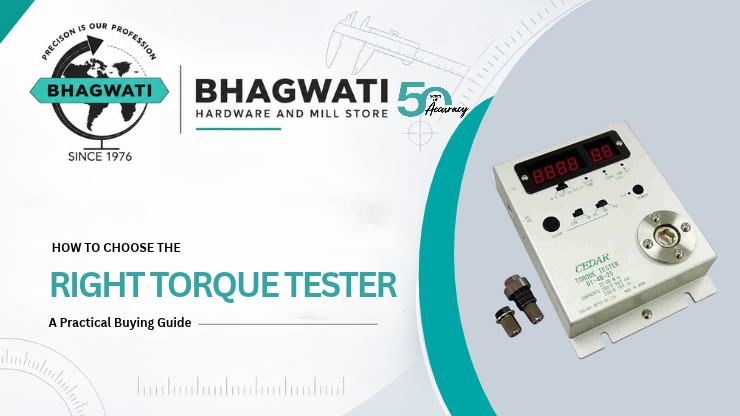
Torque testers come in different designs for different applications. Digital models offer easy-to-read displays, while specialised testers are designed for particular products or testing procedures.
Check whether you need real-time readings, peak torque measurement, or data recording. The right features depend on how you plan to use the instrument.
4. Check Units and Ease of Operation
Torque values may be displayed in units such as N·m, N·cm, or kgf·cm. Make sure the instrument supports the units your team uses and that measurements can be interpreted correctly.
Also, consider fixture compatibility, display visibility, and ease of operation. A straightforward setup can make routine testing easier for operators.
5. Consider Calibration and Working Conditions
Regular calibration helps maintain confidence in measurement results. Before buying, ask about calibration requirements, service availability, and technical support.
Think about where the tester will be used, too. Available workspace, operating conditions, testing frequency, and the nature of the samples can all influence your choice.
6. Compare Cost and Long-Term Value
Don't judge a torque tester by its purchase price alone. Consider calibration costs, maintenance, accessories, warranty terms, and after-sales support. A suitable instrument should meet your requirements without adding unnecessary operating expenses.
Find the Right Torque Tester With Bhagwati Hardware
Choosing the right torque tester starts with understanding your application, required torque range, accuracy, and budget. Comparing these factors can help you make a practical buying decision.
Looking for torque testing equipment for your business? Contact Bhagwati Hardware to discuss your requirements and explore suitable options for your application.